Orphan – In the Throat of History
Exhibition accompanying László Nemes’ film Orphan
Curator: Szabolcs Barakonyi
Basic concept: Gábor Böszörményi
Visual designer: Márton Ágh
Sound: Tamás Zányi
Exhibition on show untill April of 2026 in Budapest at Kiscelli Museum.
A few decades ago it seemed that the time of videos had come and that photography had declined. Yet everyone continued to take photos. Later, it seemed we preferred to share our personal stories with each other through still images, and it turned out that history can be recalled better with a few minute-long animations when photos are shaken and algorithmically edited. The shifts affecting moving and still images are related to changes in attention, and this applies equally to family documents and history captured in pictures.
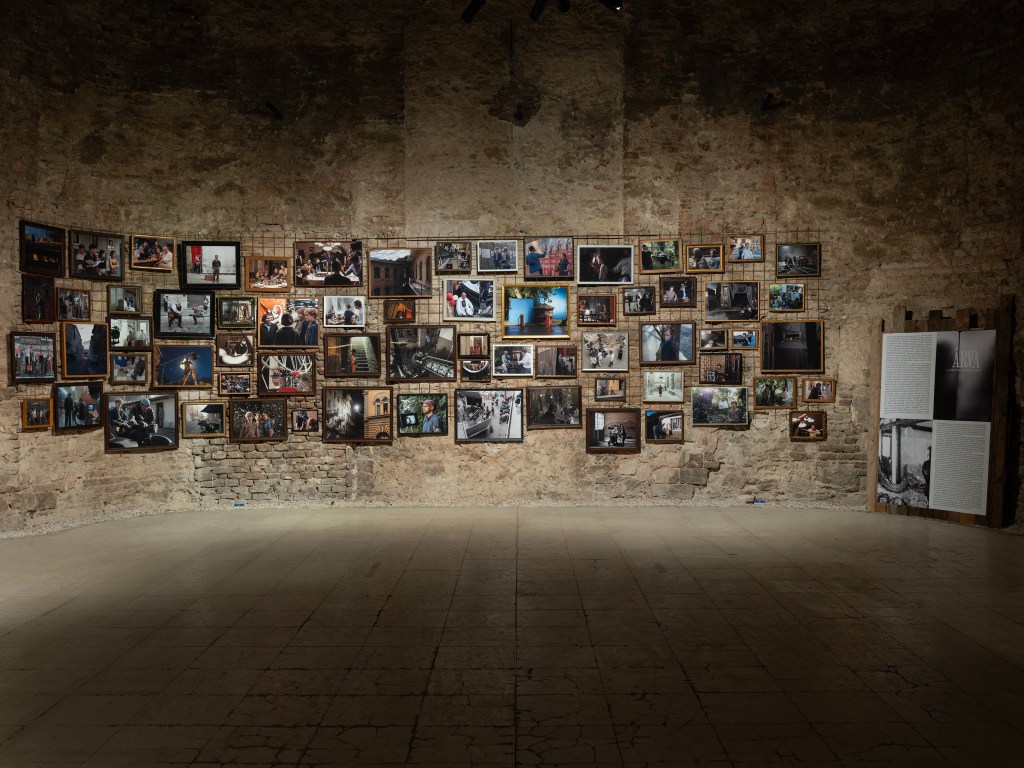
Photo: Szabolcs Barakonyi
A major question concerns what can be regarded as fixed. Experience shows that sources are questioned, the effect of facts on public opinion is diminishing, and verifying credibility has become a personal task. Instinctive trust in photo documents is disappearing, while the scientific means of knowledge including photography are replaced by personal beliefs. The documentary status of pictures has become malleable because we exist in the world of still and moving images made without light and popping up and disappearing exclusively on electronic displays. Thus films look for certainties in such an interrelated system in which the definition of not only reality but also fiction is uncertain.
The story of Orphan is only partly fiction. The basic idea of the film was provided by a real family story. The script writers not only endeavoured to present a historical era faithfully, but also tried to preserve the authenticity of personal, family lives. To reconstruct the environment, the film makers conducted a thorough investigation emphatically based on photographs. That was basically determined by online photo search engines and accessible photo archives, primarily Fortepan, Hungary’s largest privately owned photo collection, which is freely available to everyone.
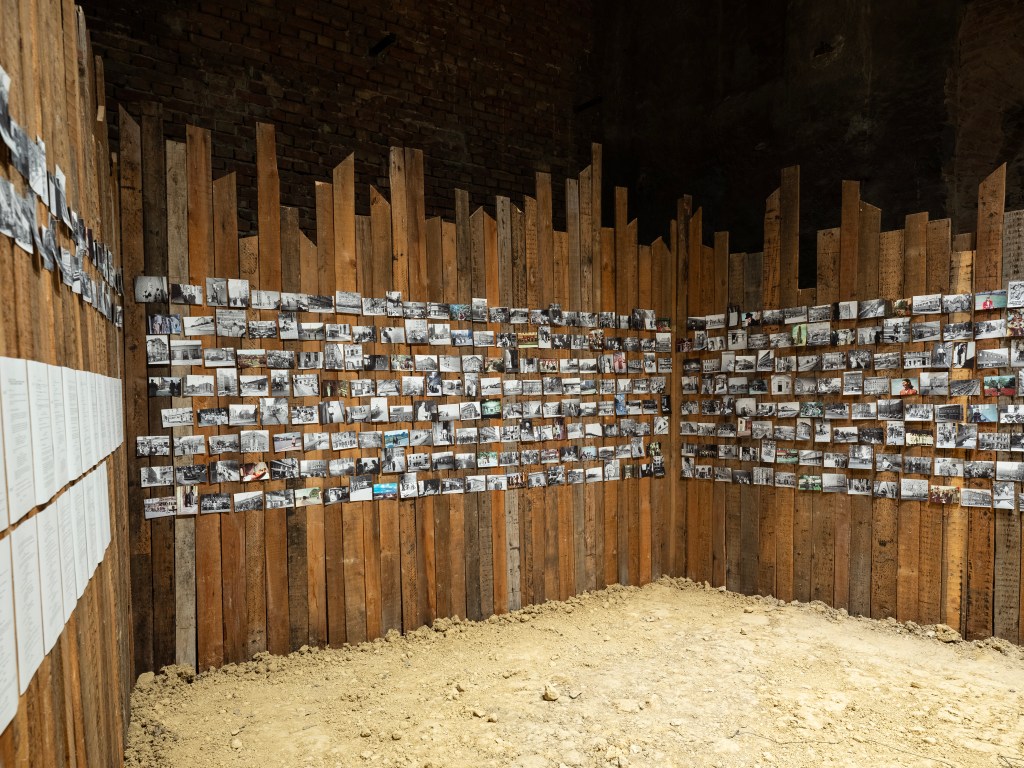
However, not only existing photographs were used. The story’s own documents were also created for the reality of Orphan. Each of the old images made anew and appearing in the story had a great significance. The traces recorded on photos and connected to the characters’ past influenced their emotions and actions. Where they still exist family photo albums illustrate the identity-forming power of photography: they support internal memory and systemize the history of generations. There are always a few early memories tucked away in them, such that some people can only remember because there are pictures taken of those moments.
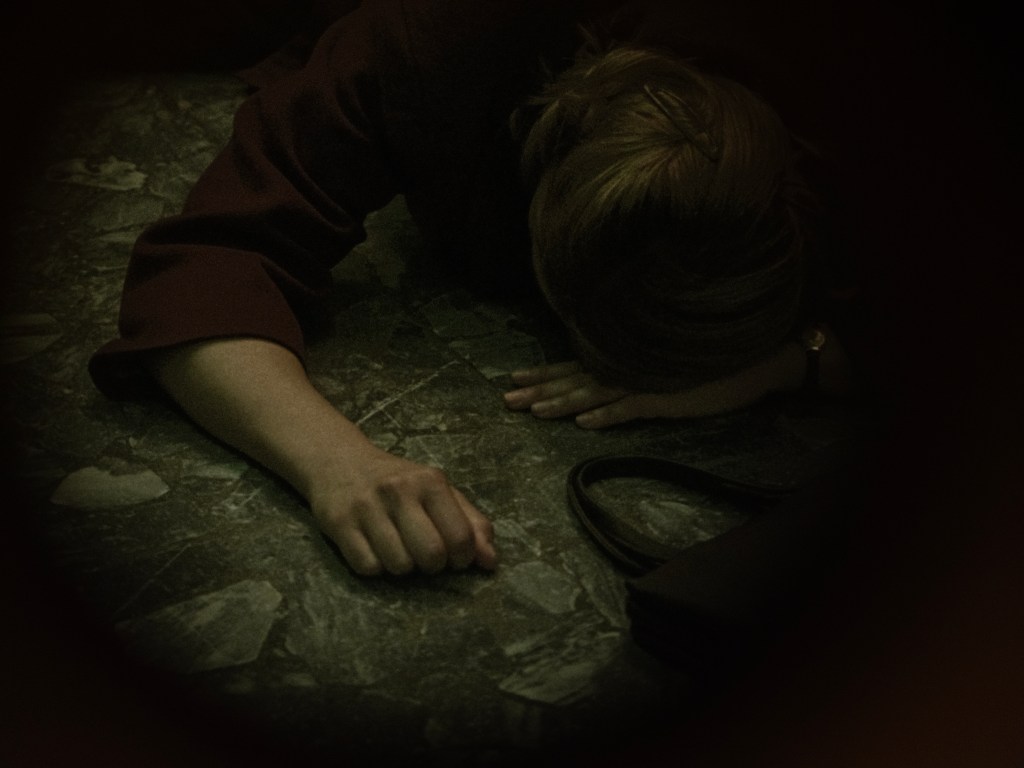
For the exhibition we have finally used about 700 photographs as authenticated documents of various realities. The production teamselected Fortepan’s images for the preparation of the film and classified them in thematic files. We have narrowed them down further. In addition to the archive we are also displaying the werk photos taken with digital cameras by Lenke Szilágyi, Dmitry Zhukov and Szabolcs Barakonyi, as well as the stopped images exposed on celluloid with the camera by Mátyás Erdély, the director of photography. He is also the author of the only moving pictures: this is the quadruply exposed cut of the visionary scene in the film, with original and uncut footage. A couple of internationally famous photographs by Ernst Haas and Saul Leiter can also be seen in the exhibition. László Nemes referred to the two artists by name in his director’s notes. In addition, three photos are on display which have a function in the film. While preparing for the exhibition a family photograph also turned up taken by András Jeles but had never been enlarged. This single image itself is able to represent the family history, providing the basic idea of the film in a condensed form.
Orphan – The Throat of the History
Book accompanying László Nemes’ film Orphan
The book and the exhibition basically focus on thinking and photo-based investigation relying on images. It examines and presents how even a discarded photo can become a reference and/or inspiration helping the authenticity of the work from the aspect of film-making.
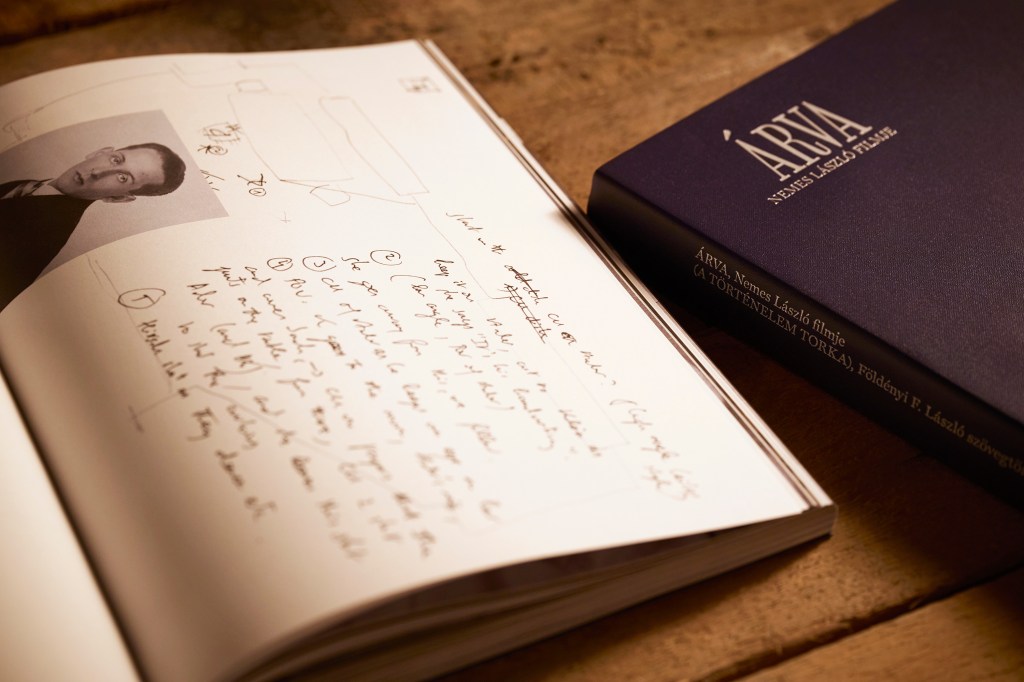
Photo: Csaba Villányi
By today a book of photographs has become the most important medium of rescuing images. In the end 288 photos have been used for this book as authenticated documents of various realities. The archive pictures have been selected from files the production team had collected for the preparation of the film; the director marked a few specifically as important references. Their task was to create the authentic visual world of the film. During their research they not only found photos of documentary value, but also often accidental masterpieces; the authors of some images were well-known and prominent photographers of the era. Besides the archive images, werk photos documenting the production of the film were used. Mátyás Erdély’s camera shots from the film and the tests preceding the shooting, plus a few internationally famous photographs are also published in the book. The latter have already been cultural references for some time.
László Nemes also refers to photo historical works, such as those by Ernst Haas and Saul Leiter in his Director’s Treatment and the names of internationally prominent photographers appear in the records of various discussions: Arthur Leipzig, Boris Savelev, Bill Brandt, Harry Callahan, Bruce Davidson, Dennis Stock, Elliott Erwitt, Erich Hartmann, Helen Levitt, Gordon Parks, William Klein, Henri Cartier-Bresson, Henri Miller, Josef Koudelka, Josef Sudek, Nino Migliori, Philip Jones Griffiths, Ray K. Metzker, René Groebli, Robert Doisneau, Ruth Orkin, Sabine Weiss, W. Eugene Smith, Vivian Maier, Werner Bischof, Walker Evans, William Gedney and Sante Vittorio Malli. Breaking away from the actual practice of employment, discourse with the past becomes artistically based.
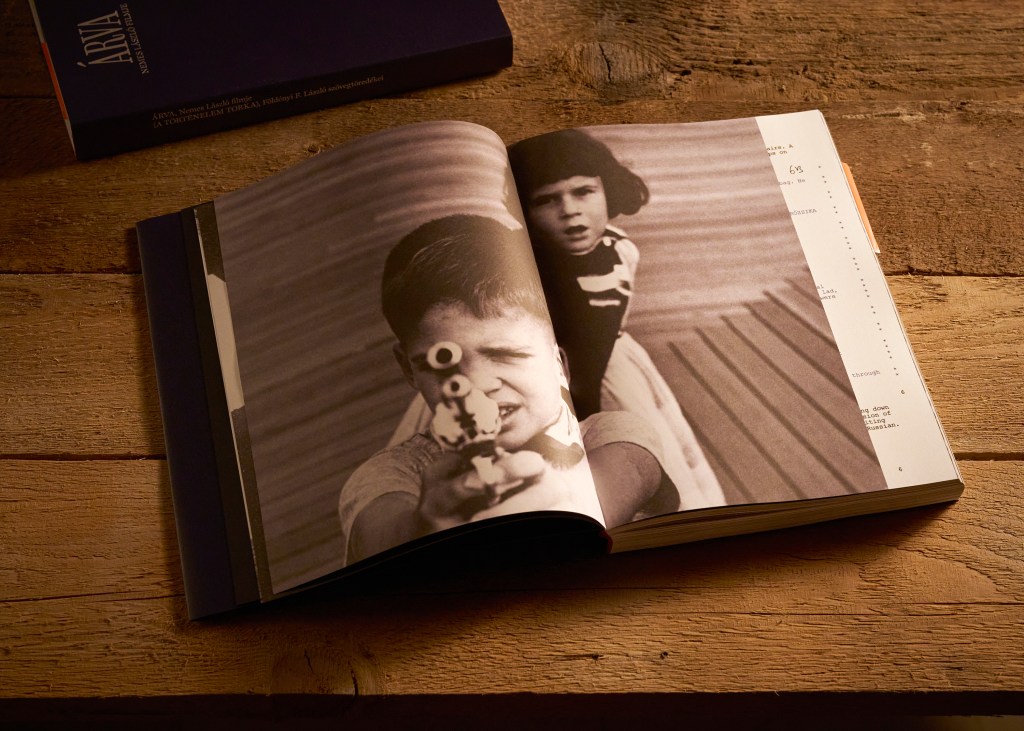
In this volume the pictures are mixed so that in the end they would support the director’s concept of the film as fragments of equal value reinforcing one another. They are individually valid works by themselves, but together they represent the investigation undertaken in the interest of the film, the reconstruction on the basis of visual documents and finally the authentic but artistic construction. The images in the book are not occupied with the story of the film, yet it naturally cannot and does not want to separate from it. It merely shows the empire of stills where we can decide how long we are looking at an image, just like in front of masterpieces in a museum.
What we will learn about a picture depends on us. The 1950s is a part of photography that Roland Barthes fully examined in La chambre claire. Published in 1980, it is not only Barthes’ last book before his death but also a work closing the pre-digital world of photography. According to its theses, it is worth examining (analogue) photography featuring two central concepts. One is studium which is not denoted as a study but as an ardent but not especially vehement attention to photographs. During the process we can learn about the historical, social and cultural meanings of a photograph to the extent of our own knowledge. Punctum is the other concept which, unlike studium, names the real essence of the picture. Punctum is in fact only interesting for admirers of photography; it remains an unapproachable concept without a devoted intention regarding images which is beyond comprehension. In contrast, today studium is primarily the immediate demand that everyone has for a photograph, the primary expectation for photographs, and the immediate verification of our knowledge. The unique visual world that depicts the story of the film works with both concepts, thereby supporting the authenticity of the story.

The structure of the film book Orphan was provided by the script, Mátyás Erdély’s and László Nemes’s personal copies, which they also used during shooting as they turned into stimulating notebooks. It incorporated writings, pictures, drawings for lighting, memos and all kinds of notes. It was also clear what had been deleted where, or changed in the text. The script is in English because László Nemes and Clara Royer wrote it in English, yet we used the pages as images, so we left the original language and typography. Speaking English naturally provides an extra layer for the reader, although this works both ways, as here and there the handwritten notes can be read in Hungarian. Without language skills, readers are bound to trust the editors that the fragments not entirely fitting the text did not end up there by accident; that all research leads to results, and countless threads are connected to each other. This is confirmed by the design of the book itself. Some photos are printed on removable sheets that can be taken out of the book and placed elsewhere if desired. There are photographs which only concealed something in their original places, just like when not everything is clear during an investigation because something is in the way. But sometimes a full, equally important image is hiding underneath the movable photograph. This arrangement also refers to the notes glued into the script during work and used for editing.
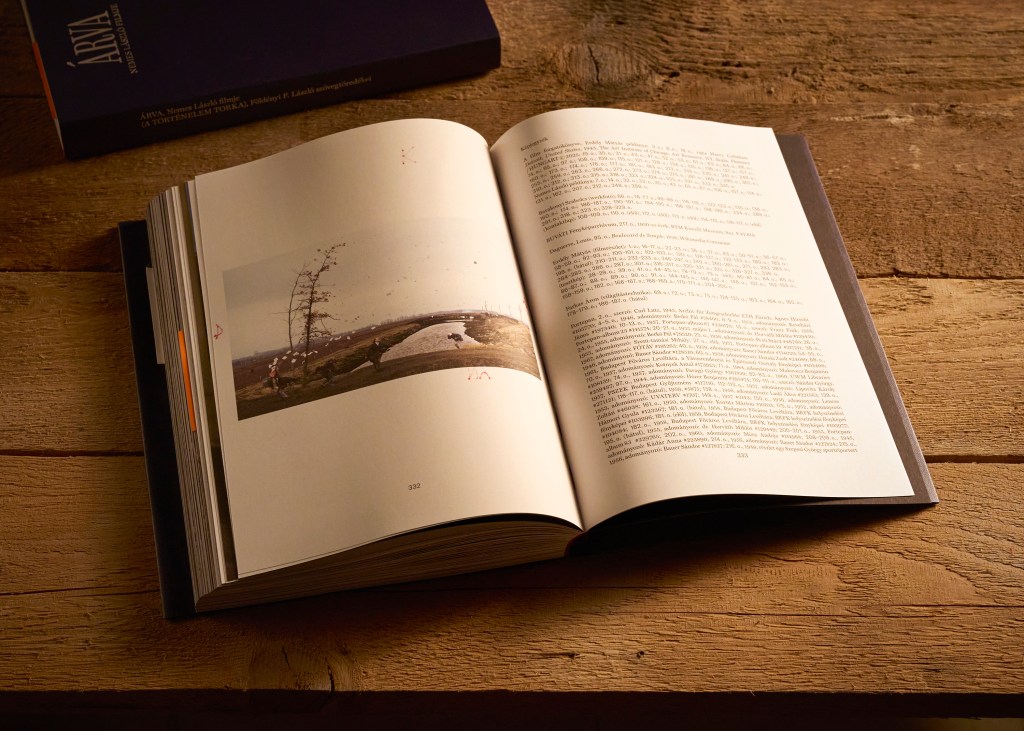
In the beginning we thought that the structure of the script and the chronology of the plot were going to ensure the structure of the film book. However, while searching for connections between the images, we quickly abandoned this constraint, allowing freer image reading to prevail over the usual linear reading order. Shooting a film does not follow the chronological order of the script either, as the sequence of scenes is influenced by countless practical factors. In the end we turned to a reference in photography: the flying pieces of paper in a photo by Canadian conceptual artist, Jeff Wall A Sudden Gust of Wind (1993), a rework version of the woodcut by Katsushika Hokusai, came to our mind. As during our work we took the director’s and the cameraman’s scripts apart and began to supplement them with new sheets it was exactly as if a sudden gust of wind blew out the taken apart scripts like a pile of paper from our hands. We decided that the playfulness of rearrangement was going to refer to chance, as if we could no longer gather the sheets again in order. Similarly to the main hero of Orphan, Andor Hirsch, the film book is not able to reach a point of rest because pages have to be constantly turned while searching for connections.
Orphan
A film by László Nemes
Book of the film
From an original idea by Mátyás Erdély
Concept, artistic director: Szabolcs Barakonyi
Creative concept of the book design: Zalán Péter Salát
Project manager: Gábor Böszörményi
Picture editors: Szabolcs Barakonyi and Zalán Péter Salát
Editor: Szabolcs Barakonyi
Licensing, editor’s assistant: Zsófia Kergyó
Consultant: József Mélyi
Published by Pioneer Pictures Ltd.
Publisher in charge: Ildikó Kemény
The volume was published during the temporary exhibition Orphan – in the Throat of History held in the Church Hall of the BHM Kiscell Museum between 7 December 2025 and 12 April 2026
Orphan
colour, Hungarian-French-German-British historical drama
2h 12m
Directed by László Nemes
Cinematographer: Mátyás Erdély ASC, HCA
Hungary’s Oscar-nominated film, 2026
Production Company: Pioneer Pictures
Premier: 23 October 2025
Distributed in Hungary by Mozinet.
 Szabolcs Barakonyi